As the calendar flips to the final days of April 2026, the global football community is realizing that the upcoming tournament in North America isn’t just about the expanded 48-team format. It is a massive laboratory for the future of human interaction. The FIFA World Cup 2026 Technology Trends we are seeing today—from augmented reality overlays to AI-driven crowd management—mark the end of the “traditional” viewing experience. For the 104 matches scheduled across the USA, Canada, and Mexico, the digital layer of the game has become just as important as the physical one.
This tournament is the first to be played in an era where 5G density is truly universal across all host venues. This infrastructure has unlocked possibilities that were mere science fiction during the 2022 edition. Fans are no longer just passive observers; they are data-integrated participants. Whether you are watching from a high-tech “Smart Seat” in Dallas or a remote work hub in Mexico City, the FIFA World Cup 2026 Technology Trends are reshaping your reality. Let’s explore the five core innovations defining this historic summer.
1. Augmented Reality (AR) Stadiums: Real-Time Data Layers
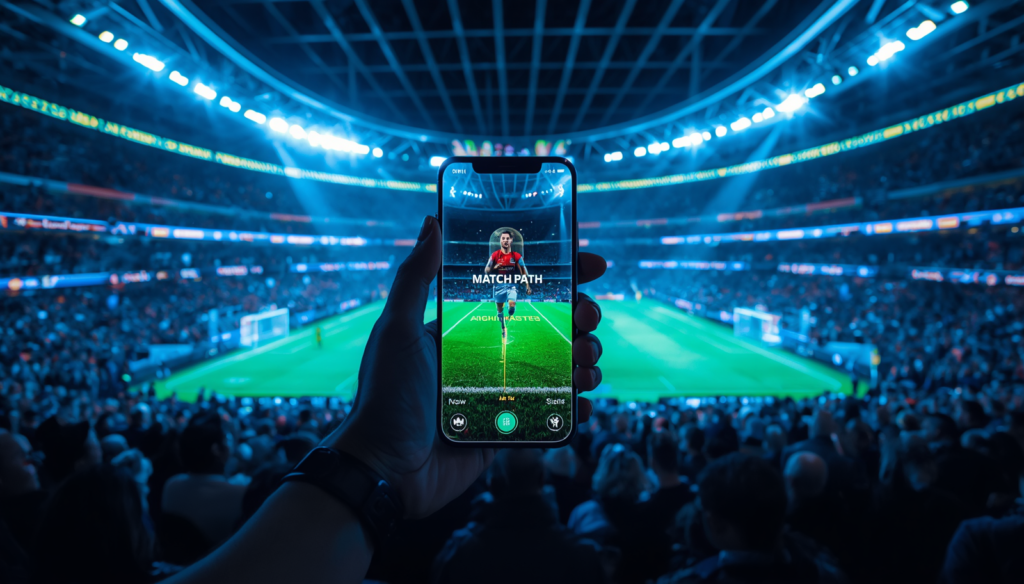
The most visible of the FIFA World Cup 2026 Technology Trends is the “Augmented Stadium.” Venues like AT&T Stadium in Dallas and BMO Field in Toronto have completed their final 5G infrastructure upgrades this month. Fans using the official tournament app can now point their smartphones at the pitch to see real-time player stats floating above the athletes. Imagine seeing a player’s current top speed, shot probability, and live heat map in a crystal-clear AR overlay while the match is in progress.
In the context of our Match Analysis Category, this AR integration allows for a deeper tactical understanding. You can track defensive lines and “passing lanes” that were previously only visible to professional scouts. The tech also serves a practical purpose: AR “wayfinding” overlays now guide fans to the shortest concession lines and nearest exits using color-coded digital paths on their screens. This is a massive leap forward in managing the record-breaking crowds expected for the 104-match schedule.
2. The “Remote Work” Travel Revolution in Mexico
A unique and trendy shift in 2026 is the rise of the “Digital Nomad Fan.” Unlike previous tournaments where fans stayed for a few days, the FIFA World Cup 2026 Technology Trends have enabled a new travel model. In cities like Mexico City, Guadalajara, and Monterrey, thousands of European and Asian fans have already arrived—two months before kick-off. They aren’t just tourists; they are remote workers taking advantage of Mexico’s vibrant coworking culture to experience the pre-tournament atmosphere.
This trend is driven by the expansion of “World Cup Coworking Hubs” that offer ultra-fast satellite internet and match-viewing zones. Fans are choosing to “live” the World Cup rather than just visit it. This allows for a deeper immersion into local culture, which we highly recommend exploring. If you are looking for places to balance work and leisure, check out the best places to visit in Florida for similar high-tech fan zones and beautiful coastal workspaces that cater to the modern digital nomad.
3. Wearable Tech: The Aero-FIT Jersey Revolution
On the pitch, the FIFA World Cup 2026 Technology Trends are visible in the very fabric the players wear. Nike and Adidas have recently unveiled their final federation kits, featuring innovations like “Aero-FIT” and “Body-Mapped Ventilation.” These aren’t just jerseys; they are advanced cooling systems. Using computational design, these kits feature “open mesh zones” that move air across the body, which is vital for the extreme summer heat expected in host cities like Miami and Houston.
For the Rising Stars of 2026, these jerseys provide a marginal gain that could be the difference between victory and exhaustion in the 90th minute. The kits are also eco-friendly, made from 100% recycled textile waste—a major step toward FIFA’s “Net Zero” goals. Fans can also purchase “Smart Supporter” versions of these jerseys that feature embedded NFC chips. Scanning the crest of your jersey with your phone unlocks exclusive behind-the-scenes content and real-time training data for that specific national team.
4. AI Crowd Control and Smart Logistics
Managing 48 teams across three countries is a logistical nightmare, but AI is providing the solution. One of the most critical FIFA World Cup 2026 Technology Trends is the use of “Predictive Crowd Modeling.” Using IoT sensors and computer vision, stadium officials can predict “choke points” in foot traffic 20 minutes before they happen. This allows for real-time adjustments to gate openings and transport schedules, ensuring that the 2,500-KM travel days for some teams and fans remain manageable.
This tech also extends to the “Smart Transport” apps that synchronize with match tickets. If your match in Vancouver is delayed, your shuttle and train schedules update automatically in your digital wallet. This level of synchronization is essential for a tournament of this scale. It reduces the carbon footprint by optimizing bus routes and preventing “empty-seat idling” in transport hubs. For more on how these logistics affect match outcomes, stay updated with our Latest News Category.
5. The $900M Prize Pool and Digital Finance
Finally, the FIFA World Cup 2026 Technology Trends have reached the financial structure of the sport. With the prize pool boosted to $900 million, FIFA has introduced “Blockchain Transparency” for the distribution of funds to national federations. This ensures that the money intended for grassroots development actually reaches its destination. For fans, the tournament has gone “Fully Cashless.” Every stadium and official fan zone now operates on biometric or mobile-pay systems, eliminating the need for currency exchange and reducing theft.
This digital finance shift also allows for “Micro-Betting” and real-time fan engagement rewards. Fans who participate in stadium polls or use the AR features can earn “Fan Tokens” that can be redeemed for official merchandise or food vouchers. It turns the entire tournament into a gamified experience, keeping the younger “Gen Z” and “Gen Alpha” audiences engaged throughout the long 39-day tournament window.
Conclusion: A Glimpse into the Future of Sport
The FIFA World Cup 2026 Technology Trends are a testament to the power of innovation. We are no longer watching a simple game of football; we are witnessing the birth of a “Phygital” (Physical + Digital) era of entertainment. While the heart of the game remains the 22 players and a ball, the technology surrounding them has made the experience more accessible, immersive, and sustainable than ever before.
As we count down the final weeks to June 11, make sure your devices are updated and your “Digital Fan Pass” is ready. The future has arrived, and it’s playing out across North America. For official tech specifications and app downloads, visit the FIFA World Cup 2026 Digital Hub. You can also research the evolution of sports technology on the Sports Engineering Wikipedia Page.