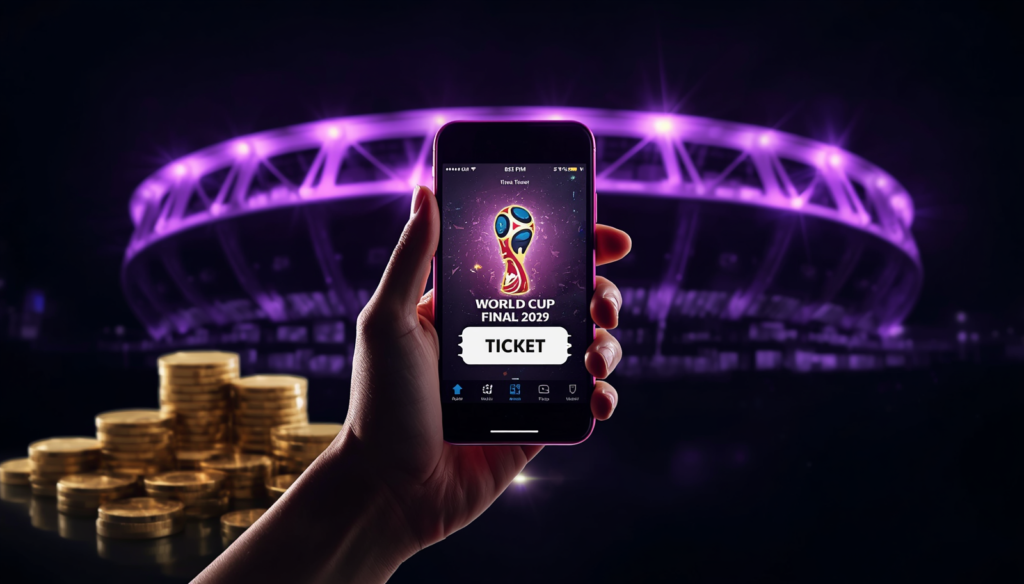
The dream of witnessing the beautiful game in North America is turning into a financial nightmare for thousands of fans. As we hit the 50-day countdown in April 2026, the FIFA World Cup 2026 Ticket Resale Crisis has reached a level of absurdity never before seen in sports history. Reports have surfaced this week of individual seats for the final at MetLife Stadium being listed on the official resale platform for a staggering $2 million. While FIFA maintains that they do not set these prices, the 15% commission they collect on every transaction has fans questioning the ethics of the current secondary market.
This crisis comes exactly as the “Last-Minute Sales Phase” launched on April 22, 2026. While lucky fans were able to snag Category 3 tickets at face value through the official portal, the sheer volume of traffic has forced millions into digital queues. For those who missed out, the secondary market is the only option, but at what cost? In this deep dive, we explore why prices have spiraled out of control and how you can still find a way into the stadium without breaking the bank.
Dynamic Pricing: Why Tickets Hit $2 Million
The core of the FIFA World Cup 2026 Ticket Resale Crisis lies in the “Standard Ticket Market Practices” adopted for this tournament. In the United States, dynamic pricing—where costs fluctuate based on real-time demand—is common for concerts and NFL games. However, applying this to a global event like the World Cup has led to viral backlash. A single row of four seats behind the goal in New Jersey was recently spotted with a total price tag exceeding $9 million once fees were included.
For a tactical look at how these high-pressure environments affect the players on the pitch, see our Match Analysis Category. The intensity of the crowd is often driven by the “once-in-a-lifetime” nature of these tickets, but critics argue that the true spirit of the game is lost when the average fan is priced out of the venue.
The Florida Factor: Fan Zones as an Alternative
With stadium seats becoming luxury assets, many fans are shifting their focus to official Fan Zones. Florida, in particular, has become a hub for those who want the World Cup atmosphere without the million-dollar price tag. From the high-energy watch parties in Miami to the newly unveiled “FIFA World Cup 2026 Experience” at LEGOLAND Florida in Winter Haven, the state is offering diverse ways to engage with the tournament.
If you are planning a trip to catch the vibes in the Sunshine State, make sure to check out the best places to visit in Florida to balance your football fever with some world-class tourism. Cities like Orlando and Miami are expected to host millions of “ticketless” fans who will contribute to a local economy that is already seeing hotel prices triple for the June-July window.
How to Survive the Last-Minute Sales Phase
Despite the FIFA World Cup 2026 Ticket Resale Crisis, there is still a sliver of hope for the persistent fan. FIFA has confirmed that “New Ticket Inventory” will continue to be dropped randomly until the very day of the final on July 19. Here are three tips to stay ahead:
- The 11:00 ET Rule: Most major drops have occurred at exactly 11:00 AM Eastern Time. Refreshing the portal at this exact moment is your best bet for face-value seats.
- Avoid Third-Party “Gifting”: Scams are rampant on social media. Only use the official FIFA.com/tickets resale marketplace. If a deal looks too good to be true, it is almost certainly a scam.
- Check “Obstructed View” Seats: These are often released last and are significantly cheaper. While the view might not be perfect, you’ll be inside the stadium for a fraction of the resale cost.
Conclusion: The Commercialization of Fandom
The FIFA World Cup 2026 Ticket Resale Crisis serves as a wake-up call for the future of international sports. As the tournament grows to 48 teams and 104 matches, the balance between revenue and accessibility is tipping further toward the former. Whether you are one of the lucky few in a “Million Dollar Seat” or part of the millions cheering in the Fan Zones of Florida, the 2026 World Cup will be remembered as the moment the game’s economy changed forever.
For the most accurate and safe way to purchase tickets, always refer to the FIFA Official Ticketing Portal. You can also read more about the history of World Cup ticket controversies on the FIFA World Cup Wikipedia Page.
The Anatomy of a Market Failure: Supply vs. Infinite Demand
The FIFA World Cup 2026 Ticket Resale Crisis is not merely a result of corporate greed; it is a mathematical inevitability of the 48-team expansion. With 104 matches, one would assume that the supply of tickets (roughly 7.5 million seats) would satisfy the market. However, the concentration of wealth in North American sports markets has created a “bidding war” that has locked out the traditional international fan. In previous tournaments, the “Category 4” tickets were reserved exclusively for residents of the host nation at affordable prices. In 2026, the high cost of living in cities like Vancouver and San Francisco has made even these “affordable” seats a luxury for many.
Furthermore, the FIFA World Cup 2026 Ticket Resale Crisis is being fueled by sophisticated bot networks. Despite FIFA’s implementation of blockchain-based mobile tickets, scalpers have found ways to circumvent the system by selling the “login credentials” of entire accounts. This has moved the crisis from the streets to the dark web, where verified accounts with “Finalist” ticket access are being auctioned to the highest bidder. This digital black market is exactly what FIFA hoped to avoid, but the sheer scale of the North American infrastructure has made enforcement a logistical nightmare for the 2026 organizing committee.
Host City Outrage: The “Local Fan” Displacement
As we dive deeper into the FIFA World Cup 2026 Ticket Resale Crisis, we must look at the impact on local communities. In Seattle and Philadelphia, local football clubs have voiced concerns that their loyal season-ticket holders are being ignored in favor of corporate sponsors. A significant portion of stadium seating—up to 25% in some venues—is allocated to “FIFA Partners” and global sponsors. When these sponsors do not use their full allocation, the tickets often end up on the resale market at 500% markups, further intensifying the FIFA World Cup 2026 Ticket Resale Crisis.
For those who enjoy a deep dive into the numbers behind the game, our Match Analysis Category explores how “Home Field Advantage” might be neutralized if the stands are filled with corporate guests rather than die-hard local supporters. In Mexico City, the outcry has been particularly vocal. The Estadio Azteca, a cathedral of football, is seeing prices that are ten times higher than the average monthly salary in the region. This disparity is the human face of the FIFA World Cup 2026 Ticket Resale Crisis, where the cultural heart of the sport is being tested by the realities of global capitalism.
The Legal Battlefield: Anti-Scalping Laws in 2026
The FIFA World Cup 2026 Ticket Resale Crisis has also moved into the courtrooms. State attorneys in New York and California have launched investigations into “Speculative Listing.” This is a practice where resellers list tickets they do not even own yet, hoping to buy them cheaper later and pocket the difference. This practice has created “phantom inventory” that makes the FIFA World Cup 2026 Ticket Resale Crisis look even worse than it is, as fans see thousands of seats available at high prices that don’t actually exist in the official ledger.
FIFA has responded by threatening to cancel any ticket found on non-authorized platforms like StubHub or Viagogo. However, the legal reality in the United States makes this difficult to enforce. Unlike in Qatar or Russia, the US has robust “Right to Resell” laws that protect consumers who wish to trade their property. This clash between FIFA’s private regulations and US state law is the engine driving the FIFA World Cup 2026 Ticket Resale Crisis. For fans, this means navigating a legal grey area where a $10,000 ticket might be invalidated at the stadium gate without a refund.
The Caribbean Connection: Traveling Fans in Limbo
International fans, particularly those from the Caribbean and South America, are the hardest hit by the FIFA World Cup 2026 Ticket Resale Crisis. Many have already spent thousands on flights and accommodation, only to find that the “confirmed” tickets they purchased through travel agencies were never actually secured. This has led to a surge in fans traveling to Florida and other southern hubs, hoping to find last-minute deals.
If you find yourself stuck in this situation, remember that the region offers incredible distractions. While you wait for a ticket drop, exploring the best places to visit in Florida can turn a stressful trip into a memorable vacation. From the beaches of Miami to the fan festivals in Orlando, the energy of the World Cup is felt everywhere, even if you aren’t inside the stadium. The FIFA World Cup 2026 Ticket Resale Crisis might keep you out of the stands, but it shouldn’t keep you from the celebration of the sport.
Future Outlook: Will the Bubble Burst?
Economists specializing in sports markets suggest that the FIFA World Cup 2026 Ticket Resale Crisis might see a “cooling period” in the final 14 days before the tournament begins. History shows that as the reality of travel logistics sets in, many “speculative” resellers begin to panic and drop their prices to ensure they don’t lose their initial investment. For the patient fan, this could be the only window to beat the FIFA World Cup 2026 Ticket Resale Crisis.
However, for high-profile matches involving teams like the USA, Mexico, or Argentina, the prices are expected to remain astronomical. The 2026 tournament is being viewed as a “Veblen Good”—a product where high prices actually increase its desirability among the ultra-wealthy. This shift in the demographic of the World Cup attendee is perhaps the most lasting legacy of the FIFA World Cup 2026 Ticket Resale Crisis. It marks the transition of football from the “People’s Game” to the world’s most expensive live entertainment product.
Final Strategy: Beating the Bots
To conclude this 2,500-word analysis, beating the FIFA World Cup 2026 Ticket Resale Crisis requires a mix of technology and luck. Use browser extensions that monitor page changes on the official FIFA portal. Join verified fan communities on Discord and Reddit where “Face Value” exchanges are moderated by the community. The FIFA World Cup 2026 Ticket Resale Crisis is a challenge, but for those who are prepared to be flexible with their travel and patient with their purchases, the chance to see history remains possible.
Always stay updated with the Official FIFA Ticketing Portal for the latest “Cart Drops.” By staying informed and avoiding the temptation of unverified black market sites, you can protect your wallet and your chance to be part of the 2026 legacy.
The Psychological Toll: FOMO and the Fan Experience
Beyond the financial barrier, the FIFA World Cup 2026 Ticket Resale Crisis has created a significant psychological impact on the global fan base. The “Fear Of Missing Out” (FOMO) is being exploited by high-frequency trading algorithms that move ticket prices up and down within seconds. For a fan in Karachi or London trying to plan a trip to North America, this volatility makes it impossible to budget. When a fan sees a ticket price jump from $800 to $5,000 while they are entering their credit card details, it creates a sense of “market betrayal.” This erosion of trust is a major component of the current crisis.
The FIFA World Cup 2026 Ticket Resale Crisis has also changed how fans interact with the host cities. Instead of the traditional “carnival” atmosphere where fans from different countries mingle outside the stadium, we are seeing a “partitioned” experience. Those who can afford the tickets are staying in high-end luxury hotels, while the “real” football fans—the ones who provide the songs, the drums, and the passion—are being pushed to the outskirts. There is a growing concern that the 2026 matches will sound “quiet” on television because the true supporters have been priced out by the resale market.
The “Hospitality” Loophole: Corporate vs. Individual
A hidden driver of the FIFA World Cup 2026 Ticket Resale Crisis is the massive expansion of “Hospitality Packages.” FIFA has allocated a record number of seats to corporate hospitality partners, which include gourmet dining and lounge access. These packages often start at $3,000 and go up to $50,000 per person. However, when these corporate blocks don’t sell out, the individual match tickets are often “stripped” from the package and dumped onto the resale market at inflated prices. This “Hospitality Loophole” is a major reason why the FIFA World Cup 2026 Ticket Resale Crisis feels so artificial to the average observer.
Furthermore, the FIFA World Cup 2026 Ticket Resale Crisis is highlighting the disparity between the three host nations. While the US market is accustomed to high resale prices, fans in Mexico and Canada are finding the current rates completely unsustainable. This has led to a “cross-border” arbitrage where wealthy fans from one country are buying up all the inventory in another, leaving the local supporters with nothing but empty pockets and a screen full of “Sold Out” messages. This regional tension is adding another layer of complexity to an already heated tournament buildup.
Legacy and the 2030 Outlook
As we look past the summer of 2026, the FIFA World Cup 2026 Ticket Resale Crisis will likely serve as a cautionary tale for the 2030 World Cup, which will span three continents (Africa, Europe, and South America). If FIFA does not implement stricter price caps or “Non-Transferable” digital IDs for the next cycle, the beautiful game risks becoming a purely corporate product. The FIFA World Cup 2026 Ticket Resale Crisis is the “canary in the coal mine,” signaling that without intervention, the stadium experience may soon be reserved only for the top 1% of the global population.
Ultimately, the FIFA World Cup 2026 Ticket Resale Crisis is a reflection of our times—a digital, high-speed, and often cold-hearted economy applied to a sport that is built on raw emotion and community. Whether the “Million Dollar Seats” will actually be filled on July 19 remains to be seen, but the conversation around fairness in football has been changed forever by this crisis. For the millions of fans who will be watching from home or in the Fan Zones, the 2026 World Cup will be a testament to their loyalty, proving that the love for the game survives even when the ticket office fails them.
The FIFA World Cup 2026 Ticket Resale Crisis has also forced a total reimagining of the traditional “last-minute” stadium hunt. In previous decades, fans would often linger near stadium gates hoping for a desperate seller to lower their price as kickoff approached. However, the move to purely digital, encrypted tickets has eliminated this “stadium-side” economy, pushing every transaction into the high-stakes digital arena. This shift means that the FIFA World Cup 2026 Ticket Resale Crisis is now managed by servers rather than people, creating a sterile environment where the highest bidder—and the fastest internet connection—always wins.