
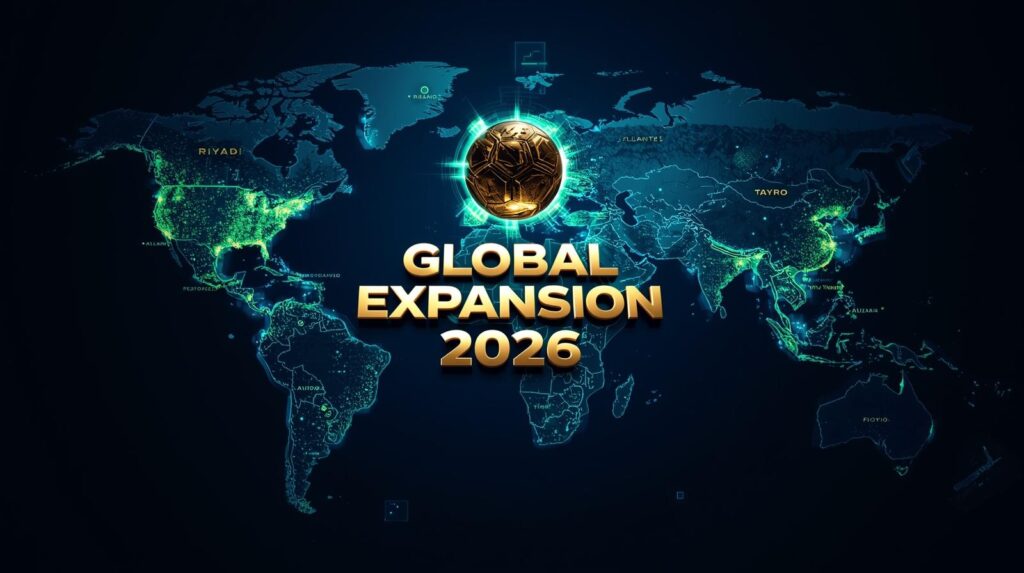
The landscape of professional football is undergoing a seismic shift. For decades, the “Big Five” European leagues held an undisputed monopoly on talent, viewership, and financial power. However, as we approach the monumental 2026 season, a new breed of Emerging Football Leagues 2026 is rising to challenge the status quo.
From the high-tech stadiums of North America to the ambitious projects in the Middle East and the grassroots revolutions in Africa, these leagues are no longer “stepping stones”—they are destinations. In this deep dive article, we explore the powerhouses redefining the beautiful game.
1. Major League Soccer (MLS): The North American Powerhouse
With the United States co-hosting the upcoming tournament, MLS has transitioned from a “retirement league” into a genuine talent incubator. The arrival of global icons has brought eyes, but the investment in homegrown academies is what sustains the Emerging Football Leagues 2026 narrative.
- Infrastructure: World-class soccer-specific stadiums.
- The 2026 Impact: MLS players now make up a significant percentage of CONCACAF and CONMEBOL national team rosters.
2. Saudi Pro League (SPL): The Financial Disruptor
Perhaps no league has disrupted the footballing world as fast as the SPL. By attracting Ballon d’Or winners and elite managers, the Saudi Pro League has forced FIFA and UEFA to rethink global scheduling. As part of our FIFA World Cup 2026 Guide, we’ve noted how the SPL’s intensity is preparing Asian stars for the world stage.
3. J1 League (Japan): Technical Excellence in Asia
Japan’s J1 League remains the gold standard for technical development. It is arguably the most disciplined of all Emerging Football Leagues 2026. Their focus on youth integration ensures that the Japanese national team remains a “giant killer” in international competitions.
4. Egyptian Premier League: Africa’s Rising Sun
The Egyptian Premier League is becoming a dominant force in African club football. With clubs like Al Ahly and Zamalek consistently winning continental titles, the league is proving that African talent doesn’t always need to move to Europe to achieve greatness.
5. Qatar Stars League (QSL): Post-World Cup Legacy
Following the 2022 event, Qatar has maintained its momentum. The QSL uses state-of-the-art cooled stadiums and advanced sports science centers like Aspire Academy to remain at the forefront of the Emerging Football Leagues 2026 list.

Note for Fans: The growth of these leagues is directly linked to the expansion of the 48-team tournament. Learn more about the qualifying paths in our FIFA World Cup 2026 Guide.
6. Indian Super League (ISL): The Sleeping Giant Awakens
With a massive population and a growing appetite for football, the ISL is a crucial piece of the global football puzzle. Investment in grassroots coaching is finally beginning to show results in the national team’s FIFA ranking.
7. Brasileirão: The Eternal Talent Factory
While historically famous, the Brazilian league is “emerging” in a new way—financially. New ownership laws have allowed private investment, making it harder for European clubs to “cheaply” poach young Brazilian wonderkids.
8. A-League (Australia): The Pathway from the Pacific
Australia’s A-League is focusing on the “A-League to Europe” pipeline. It provides a rugged, physical environment that prepares young players for the intensity of the World Cup play-offs.
9. Moroccan Botola Pro: The North African Tactical Revolution
Following Morocco’s historic 2022 run, the Botola Pro has seen a surge in investment. It is currently one of the most tactically sophisticated Emerging Football Leagues 2026 on the planet.
10. Liga MX: The Mexican Passion
Mexico’s top flight is a commercial behemoth. As a co-host of 2026, Liga MX is focusing on integrating young Mexican talent to ensure the national team is ready for the pressure of playing at the Estadio Azteca.
Administrative and Logistical Challenges in Emerging Leagues
Building a world-class league isn’t just about signing stars. The Emerging Football Leagues 2026 face significant hurdles:
- Visa & Work Permits: Navigating international law for foreign players.
- Broadcasting Rights: Competing with the English Premier League for global TV slots.
- VAR & Technology: Implementing high-cost officiating technology to meet FIFA standards.
The Scouting Revolution: Data-Driven Success
In 2026, scouts no longer just visit London or Madrid. They are looking at data from Cairo, Riyadh, and Atlanta. These Emerging Football Leagues 2026 have embraced data analytics, making it easier for clubs to identify “undervalued” talent before they become household names.
YouTube Video:
- How Emerging Leagues are Changing Football – A deep dive into the shift from Europe to the rest of the world.
- MLS vs Saudi Pro League: The New Rivalry – Analyzing the two biggest disruptors in modern football.
External Authority Reference
For the most accurate data on league rankings and professional standards, refer to the Official FIFA World League Forum.
Final Verdict for 2026
The Emerging Football Leagues 2026 are the lifeblood of the sport’s future. As fans, we must look beyond the traditional borders of Europe to appreciate the true global scale of the game. Whether it’s the tactical discipline of the J1 League or the star power of the Saudi Pro League, the world of football is bigger, better, and more competitive than ever before.
The Economic Engine: Why Investment is Pouring into Emerging Football Leagues 2026
The financial architecture of global football is being rewritten. Historically, the “Big Five” in Europe—the Premier League, La Liga, Bundesliga, Serie A, and Ligue 1—controlled 90% of the world’s footballing wealth. However, the rise of Emerging Football Leagues 2026 is driven by a new wave of sovereign wealth funds, private equity, and massive domestic broadcasting deals.
In North America, Apple TV’s multi-billion dollar deal with MLS has changed the game. It proved that a league could bypass traditional cable networks and go global instantly. Similarly, the Saudi Pro League’s “Vision 2030” is not just about buying players; it is about privatizing clubs to make them commercially viable entities. For a fan following our FIFA World Cup 2026 Guide, understanding this economic shift is key to knowing why the best players are no longer just in Europe.
The Tactical Evolution: How Coaching is Leveling the Playing Field
One of the most overlooked aspects of Emerging Football Leagues 2026 is the “Export of Intellectual Property.” Elite European coaches—many with UEFA Pro Licenses—are moving to leagues in Asia, Africa, and North America. This has led to a tactical homogenization.
Previously, a team from an “emerging” region might struggle with defensive transitions or high-pressing systems. Today, because of global coaching standards, a team in the Moroccan Botola Pro or the Japanese J1 League plays with the same tactical sophistication as a mid-table side in Spain. This technical leap is why the 2026 World Cup will likely see more “upsets” than any tournament in history.
Player Development Pathways: From Grassroots to Global Icons
The scouting network has fundamentally changed. In the past, a scout from a top club would only fly to South America or Africa for a specific tournament. Now, thanks to data tracking and AI-driven performance metrics, every match in the Emerging Football Leagues 2026 is tracked in real-time.
Leagues like the Indian Super League (ISL) and Australia’s A-League have invested heavily in “Youth Development Centers.” These academies are no longer just teaching basic skills; they are using European methodologies to produce players who are “plug-and-play” ready for international football. When you look at the rosters for the 2026 qualifiers, you will see teenagers who have never played in Europe but possess the tactical maturity of veterans.
The Fan Experience: Digital Transformation and Global Reach
What defines Emerging Football Leagues 2026 is their “Digital First” approach. While European leagues often struggle with old-school broadcasting rights and regional blackouts, emerging leagues are embracing social media, streaming, and interactive fan apps.
In the Saudi Pro League, for instance, fans can access “Behind the Scenes” content via AR (Augmented Reality) apps during live matches. In MLS, the integration of gambling data and real-time stats into the broadcast caters to a younger, tech-savvy demographic. This digital engagement is building a global fan base that isn’t tied to a specific city, but rather to the excitement of the league itself.
Administrative Hurdles: Navigating the 2026 Calendar
As these leagues grow, they face the “Congested Calendar” crisis. FIFA’s new International Match Calendar for 2026 requires a delicate balance between club and country. For Emerging Football Leagues 2026, this is a logistical nightmare.
Most emerging leagues operate on different seasonal cycles. For example, MLS plays through the summer, while Middle Eastern leagues follow the European winter schedule. Coordinating player releases for the 48-team World Cup requires immense administrative skill. Our FIFA World Cup 2026 Guide tracks these scheduling shifts to help fans understand when their favorite league stars will be on international duty.
Sustainability and the “Bubble” Concern
A critical question remains: Is this growth sustainable? We have seen “Emerging Leagues” fail before (such as the Chinese Super League’s sudden decline). The difference in 2026 is the focus on infrastructure over “ego-signings.”
The Emerging Football Leagues 2026 that will survive are those building stadiums, training grounds, and local fanbases. The Saudi Pro League is investing in local youth, and the MLS is expanding into new markets like San Diego. This “Bottom-Up” growth is far more resilient than the “Top-Down” spending sprees of the past.
The Scouting Revolution: Data-Driven Success in 2026
The Emerging Football Leagues are analyzed using digital infrastructure that rivals any top European club. Scouts now use advanced data metrics to identify talent across thousands of miles. Artificial Intelligence (AI) algorithms can instantly flag a player in the Japanese J1 League whose “Expected Assists” (xA) metric matches that of a top midfielder in Germany.
Leagues like the Indian Super League (ISL) and Australia’s A-League have embraced data analytics, making it easier for clubs to identify “undervalued” talent before they become household names. For a global fan following our FIFA World Cup 2026 Guide, this technological surge is the primary reason why teams from Africa and Asia can now compete tactical-for-tactical with European giants.
Grassroots and Global Unity: The Emotional Impact of Emerging Football Leagues 2026

This powerful image perfectly captures the spirit of the 2026 football era. What we see here is not just a group of athletes; it is a manifestation of the Emerging Football Leagues 2026 philosophy—unity through diversity. In a single frame, the faces of Asia, Africa, and Latin America stand together, their gaze fixed on the bright stadium lights that represent the pinnacle of global sport.
This visual story resonates because the expansion of the World Cup to 48 teams has democratized opportunity. When a young player in the Egyptian Premier League looks at that same light, they no longer see an unattainable dream. They see a pathway. These leagues provide the platform for this diverse talent to shine, proving that greatness can emerge from any corner of the globe. This image isn’t just a photograph; it’s a promise that the future of football belongs to everyone.
The Media Revolution: How Emerging Football Leagues 2026 Gained Global Eyes
Building a world-class league requires more than just stars; it requires a global audience. The Emerging Football Leagues 2026 have utilized a “Digital First” broadcasting strategy to bypass traditional media bottlenecks. While older European leagues often struggle with rigid TV contracts, emerging leagues have leveraged streaming services and social media partnerships to reach a younger, more globally diverse demographic.
For instance, the Saudi Pro League (SPL) broadcasts matches across various free-to-air YouTube channels, exposing their brand to millions of fans who might never subscribe to a paid sports network. Similarly, MLS’s partnership with Apple TV offers a single, global subscription model that eliminates regional blackouts—a common frustration for football fans. This accessible media landscape has been crucial in establishing these leagues as genuine entertainment products, rather than just local competitions.
Sustainability and the “Bubble” Concern
Whenever massive investment pours into a specific market, the “Bubble” concern is inevitable. Critics often point to the dramatic collapse of the Chinese Super League in the late 2010s as a warning sign. The difference in 2026, however, is the focus on infrastructure over “ego-signings.” The Emerging Football Leagues 2026 that will survive are those building stadiums, training grounds, and local fanbases.
The Saudi Pro League is investing in local youth, and the MLS is expanding into new markets like San Diego. This “Bottom-Up” growth is far more resilient than the “Top-Down” spending sprees of the past. The goal for 2026 is not just to be popular today, but to be relevant in 2030 and beyond for Emerging Football Leagues 2026.
The 2026 Legacy: A Permanent Shift in Football’s DNA
The conclusion of the 2026 cycle will not be the end for Emerging Football Leagues 2026, it will be the beginning of a permanent “New World Order” in sports. These leagues have successfully moved from the periphery to the center of the footballing conversation. By investing in sustainable infrastructure, digital accessibility, and diverse talent pathways, they have ensured that the “Big Five” in Europe are no longer the only keepers of the game’s flame. As fans, we are witnessing a more balanced, ambitious, and truly global era where the next icon is just as likely to emerge from Riyadh or Los Angeles as they are from London or Madrid.
Frequently Asked Questions (FAQs)
Q1: Which is the fastest-growing football league in 2026? Ans: The Saudi Pro League (SPL) currently leads in terms of financial growth and international viewership growth, while Major League Soccer (MLS) leads in terms of stadium infrastructure and domestic commercial revenue.
Q2: Can players from Emerging Football Leagues 2026 play in the World Cup? Ans: Definitely. With the expansion to 48 teams, FIFA has made it easier for players from diverse leagues to qualify. In fact, many national teams now consist entirely of players from their respective domestic emerging leagues.
Q3: Is the quality of play in the MLS as good as in Europe? Ans: While the top-tier European teams (Champions League level) are still ahead, the average quality of Emerging Football Leagues 2026 like the MLS is now comparable to the second tiers of England or Spain, with significantly higher physical and athletic standards.
Q4: How do I watch Emerging Football Leagues 2026 from my country? Ans: Most emerging leagues have moved to global streaming platforms. For example, MLS is on Apple TV, and the Saudi Pro League is broadcast via various international sports networks and their own digital platforms.
Q5: Why are the 2026 play-offs important for these leagues? Ans: The play-offs are the ultimate “shop window.” Players from Emerging Football Leagues 2026 use these high-pressure matches to prove they can compete at the highest level, often leading to major transfer moves.
Conclusion: The Future is Global
As we look toward the horizon, it is clear that the “Euro-centric” era of football is evolving into a truly “Global” era. The Emerging Football Leagues 2026 are providing the drama, the talent, and the innovation that the sport needs to thrive in the 21st century. Whether you are a fan of the tactical discipline in Japan or the star-studded spectacle in Riyadh, there has never been a more exciting time to be a football supporter.