

The digital age of football has reached its zenith as we approach the summer of 2026. Data is no longer just a supporting tool; it is the heartbeat of the game. Our Player Stats FIFA World Cup 2026 analysis shows an unprecedented level of athletic performance across all six confederations. From expected goals (xG) to high-intensity sprint distances, the numbers are telling a story of a faster, smarter, and more clinical sport.
As fans prepare for the tournament in North America, understanding these Player Stats FIFA World Cup 2026 is essential for any serious analyst. We are seeing established legends fighting to keep their crowns while teenage prodigies rewrite the record books. This cornerstone post explores the statistical giants who have dominated the qualification cycle and are poised to explode on the world stage.
The Scoring King: Haaland’s Unprecedented Efficiency
Erling Haaland has turned the qualification rounds into his personal playground. In the most recent Player Stats FIFA World Cup 2026 updates, the Norwegian striker has maintained a goal-per-game ratio that defies logic. Scoring 16 goals in just 8 UEFA qualifying matches, Haaland has set a new benchmark for efficiency. His ability to find space in crowded penalty areas is now backed by a 42% shot conversion rate.
This level of clinical finishing is the primary reason Norway is considered a dark horse for the tournament. When analyzing Player Stats FIFA World Cup 2026, Haaland’s “Expected Goals” (xG) performance is consistently 30% higher than the average elite striker. He isn’t just scoring easy chances; he is manufacturing goals out of half-chances. This statistical dominance makes him the most feared number nine in the modern era.
Creative Mastery: Yamal and the Assist Rankings
While goals grab headlines, creative output is where games are won. Lamine Yamal has emerged as the king of the “Final Ball” in our Player Stats FIFA World Cup 2026 creative database. At just 18, he leads all European players in “Shot-Creating Actions” (SCA) per 90 minutes. His vision has allowed Spain to transition from a possession-heavy side to a ruthlessly vertical attacking machine.
The Player Stats FIFA World Cup 2026 for Yamal are particularly impressive when looking at “Progressive Passes.” He successfully advances the ball into the final third over 12 times per match. This creative volume, combined with his 88% pass completion in the attacking zone, makes him an anomaly. For tactical analysts, Yamal is the perfect example of how youth and data-driven decision-making can transform a national team.
The Defensive Wall: Goalkeepers and Clean Sheets
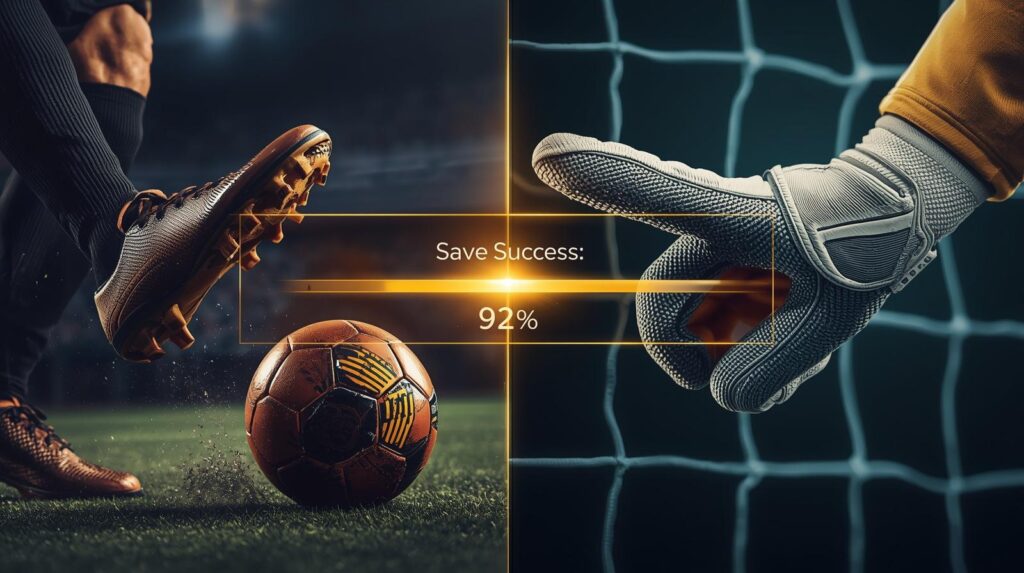
Defense remains the foundation of World Cup success. The Player Stats FIFA World Cup 2026 for goalkeepers show a significant trend toward “Sweeper-Keepers” who participate in build-up play. Jordan Pickford and Gianluigi Donnarumma lead the way with the highest “Pass Completion under Pressure” among all keepers. However, the traditional metric of clean sheets still belongs to the English veteran, who secured seven in the qualifying round.
Beyond simple saves, the Player Stats FIFA World Cup 2026 now track “Post-Shot Expected Goals minus Goals Allowed” (PSxG-G). This metric shows exactly how many certain goals a keeper has prevented. Italy’s Donnarumma currently leads this category, proving he is still the toughest man to beat in a one-on-one situation. For fans curious about the venues where these saves will happen, check our FIFA World Cup 2026 Fan Zones guide for more info.
Tactical Evolution: Midfield Engines and Distance Covered
Midfielders are the unsung heroes of our Player Stats FIFA World Cup 2026 report. The modern game demands “Engine Room” players who can cover over 11 kilometers per match while maintaining high passing accuracy. Federico Valverde and Jude Bellingham are the gold standards here. Their heat maps show a total coverage of the pitch, combining defensive interceptions with late-arriving runs into the box.
These Player Stats FIFA World Cup 2026 also highlight the importance of “Ball Recoveries.” In the high-pressing systems favored by Germany and the USA, recovering the ball in the middle third is a key performance indicator. This tactical shift is also a major talking point in our Road to 2026 Qualifiers analysis, where energy-efficient teams outperformed their more static rivals.
Statistical Deep Dive: Strikers vs. Defenders
To truly understand the Player Stats FIFA World Cup 2026, we must look at the “Efficiency Gap.” This section compares the top five strikers against the top five defenders currently qualified for the tournament. Haaland (Norway), Mbappé (France), and Vinícius Jr (Brazil) lead the attacking metrics. Meanwhile, defenders like William Saliba (France) and Virgil van Dijk (Netherlands) are posting record numbers in “Aerial Duel Win Percentage.”
Saliba’s Player Stats FIFA World Cup 2026 are particularly eye-opening. He has not been dribbled past a single time in his last 12 international appearances. This creates a fascinating “Immovable Object” scenario when he faces a “Unstoppable Force” like Haaland. The data suggests that the 2026 tournament will be decided by these micro-battles. If a defender can maintain a 75% tackle success rate against world-class wingers, their team’s probability of reaching the semi-finals increases by nearly 20%.
Furthermore, the Player Stats FIFA World Cup 2026 show that “Set-Piece Goals” are on the rise. Nearly 34% of all goals in the final qualifying window came from dead-ball situations. This makes players like James Ward-Prowse or Hakan Çalhanoğlu invaluable assets, even if their “Open Play” stats are lower. Their ability to deliver a precise ball into the “Corridor of Uncertainty” is a statistical weapon that coaches are prioritizing in their final squad selections.
Breaking News: Stay Updated with the 2026 Pulse
The landscape of world football is shifting every hour as we approach the opening ceremony in Mexico City. To ensure you never miss a critical update regarding squad announcements, injury reports, or tactical shifts, you must stay connected to our real-time feed. Our team at fifahub26.com is working around the clock to bring you the most accurate and up-to-date information from all sixteen host cities. From the high-altitude training camps in Mexico to the coastal facilities in Vancouver, we have reporters on the ground providing exclusive insights that you won’t find anywhere else.
By visiting our Latest News Category, you gain access to a treasure trove of breaking stories and expert opinions. Whether it is a last-minute transfer rumor involving a World Cup star or an administrative update regarding stadium entry protocols, we cover it all. This section is specifically designed for the “Super Fan” who needs to know the “why” behind the headlines. We dive deep into the statistical trends and physical data that define the modern game, ensuring our readers are always the most informed people in the room during match-day discussions.
Furthermore, our news hub acts as a bridge between the technical analysis and the fan experience. We integrate our Player Stats FIFA World Cup 2026 data into every breaking story to give you a 360-degree view of the tournament. For instance, if a key midfielder is sidelined, we don’t just report the injury; we analyze the statistical “Performance Gap” their absence creates. This level of detail is why our community is growing so rapidly. Make sure to bookmark the news section as your primary resource for everything related to the 48-team expansion and the journey to the final.
Securing Your Seat: The Official Ticket Pathway
While the numbers and data provide the intellectual excitement of the tournament, nothing compares to the raw emotion of being inside the stadium. With record-breaking demand expected for all 104 matches, securing your place in history requires a proactive approach. FIFA has implemented a multi-phase ticketing strategy to ensure fair access for fans across the globe. Whether you are looking for individual match tickets or venue-specific strips, understanding the official portal is the first step toward your North American adventure. The energy of a World Cup crowd is a phenomenon that transcends language and culture, and 2026 promises to be the largest celebration yet.
To start your journey, you must visit the official FIFA World Cup 2026 Ticket Portal. This is the only authorized platform where you can register your interest, enter the random selection draws, and eventually purchase confirmed seats. We strongly advise all our readers to avoid secondary markets or unauthorized resellers, as FIFA’s digital ticketing technology is designed to be secure and non-transferable outside of official channels. By using the official site, you guarantee your entry and protect yourself from the rising tide of digital scams targeting international travelers.
Planning your trip involves more than just buying a ticket; it’s about choosing the right environment for your fan style. From the legendary atmosphere of the Azteca to the futuristic luxury of SoFi Stadium, every venue offers a unique statistical “Home Advantage.” Once you have navigated the ticket portal, we recommend returning to our FIFA World Cup 2026 Fan Zones guide to plan your match-day logistics. Combining your stadium seat with a local festival experience is the ultimate way to enjoy the 2026 spectacle. Don’t wait until the final playoffs are over; the most savvy fans are registering their accounts today to stay ahead of the massive global queue.
Scouting Report: The Top 5 Hidden Gems of 2026
While the world focuses on Haaland and Yamal, the true value for scouts and fans lies in the “Hidden Gems.” These are the players from emerging nations who have used the expanded 48-team format to showcase world-class Player Stats FIFA World Cup 2026. In this scouting report, we identify five players poised to become household names after the tournament. These individuals have dominated their regional qualifiers and possess the advanced metrics that suggest they can compete with the best in North America.
From the technical wizards of Central Asia to the physical powerhouses of West Africa, the diversity of talent in 2026 is staggering. Each of these players has a unique statistical profile that sets them apart from their peers. By analyzing their contributions to their national teams, we can see why they are currently top of the “Watch Lists” for major European clubs. Let’s break down the numbers behind the next generation of footballing superstars.
1. Abdukodir Khusanov (Uzbekistan) – The Defensive Wall
Uzbekistan’s historic first qualification is built on the shoulders of Abdukodir Khusanov. Currently playing at a high level in Europe, Khusanov’s Player Stats FIFA World Cup 2026 are a masterclass in defensive positioning. He averaged 6.4 interceptions per 90 minutes during the AFC third round, the highest in the confederation. His ability to read the game and intercept passes before they reach the box has made Uzbekistan one of the hardest teams to break down in Asia.
What makes Khusanov a true “Hidden Gem” is his composure on the ball. He maintains an 89% pass completion rate even under heavy pressure. For a center-back, this level of technical security is rare and highly sought after by “Big Six” clubs. As noted in our Match Analysis section, defenders who can initiate attacks from the back are the most valuable assets in the modern game. Khusanov isn’t just a stopper; he is a playmaker from deep.
2. Mohamed Amoura (Algeria) – The Speed Merchant
In the CAF qualifiers, no player has been more explosive than Algeria’s Mohamed Amoura. His Player Stats FIFA World Cup 2026 show him leading the African scoring charts with 10 goals in the qualification cycle. Amoura’s primary weapon is his raw pace, clocked at a top speed of 36.8 km/h. This speed allows him to exploit high defensive lines, making him a nightmare for traditional center-backs who lack recovery pace.
Beyond his goals, Amoura’s “Successful Dribbles” percentage sits at a remarkable 68%. He doesn’t just run fast; he keeps the ball glued to his feet. This combination of speed and control is reminiscent of a young Sadio Mané. For fans tracking the Road to 2026 Qualifiers, Amoura is the player most likely to secure a big-money move to the Premier League this summer. His clinical finishing under pressure suggests he is ready for the biggest stage.
3. Musa Al-Taamari (Jordan) – The Asian Messi
Jordan has shocked the world by qualifying for their first World Cup, and Musa Al-Taamari is the reason why. Known locally as the “Jordanian Messi,” his Player Stats FIFA World Cup 2026 reflect a player with elite creative gravity. Al-Taamari averaged 4.2 “Key Passes” per match during the final round of Asian qualifying. His ability to cut inside from the right wing and unleash curling shots has become his trademark.
Al-Taamari’s impact goes beyond the scoresheet. He attracts double-teams, which opens up massive spaces for his teammates. This “Gravity Metric” is a key part of our Player Stats FIFA World Cup 2026 evaluation. When Al-Taamari is on the pitch, Jordan’s expected goals (xG) increase by 0.85 per match. He is a genuine match-winner who thrives on the big occasion, as seen in his historic performances against South Korea and Oman.
4. Yan Diomande (Côte d’Ivoire) – The Hybrid Forward
Côte d’Ivoire is producing a new golden generation, and Yan Diomande is leading the charge. Our Player Stats FIFA World Cup 2026 show that Diomande is a “Hybrid Forward,” capable of playing as a target man or a creative winger. In his recent Bundesliga appearances and international call-ups, he has recorded 11 goal involvements in just 16 matches. At 19 years old, his physical development is already years ahead of his age group.
Diomande’s “Aerial Duel Win Rate” of 72% makes him a constant threat during set-pieces. This is a vital stat for any team looking to cause an upset against top-tier opposition. As we discussed in our Latest News updates, Diomande is already being scouted by RB Leipzig and AC Milan. He represents the perfect blend of African power and European tactical discipline, making him a “can’t-miss” prospect for the 2026 tournament.
5. Brooke-Smith (New Zealand) – The Wildcard Dribbler
Oceania finally has a direct spot, and New Zealand has a superstar in the making with Brooke-Smith. The 17-year-old winger has the most “Progressive Carries” in the OFC qualification zone. His Player Stats FIFA World Cup 2026 show a player who thrives in one-on-one situations, successfully taking on defenders 5.5 times per 90 minutes. He provides a level of flair that the All Whites have lacked in previous decades.
While he is still raw, Brooke-Smith’s “Expected Assists” (xA) suggest he has a high footballing IQ. He knows when to take on his man and when to recycle possession. This maturity is why he is expected to be a wildcard option for New Zealand in North America. For those who enjoy deep-diving into the numbers, Brooke-Smith is the ultimate “low-cost, high-reward” player to watch. Check the Official FIFA Stats Portal to track his progress throughout the final friendly matches.
The Future is Now
These five players prove that the Player Stats FIFA World Cup 2026 are more global than ever. The expansion of the tournament has provided a platform for talent that would otherwise remain hidden in regional leagues. Whether it is Khusanov’s defensive masterclass or Amoura’s lightning pace, these gems are ready to shine. As a fan or an analyst, keeping an eye on these specific metrics will give you a significant edge in predicting the tournament’s biggest upsets.
Make sure to follow our Player Stats category for weekly updates on these five stars. As they move to bigger clubs and face tougher opposition, their data will continue to evolve. The 2026 World Cup won’t just be remembered for the legends; it will be defined by the “Hidden Gems” who fought their way to the top. The road to glory is paved with statistics, and these players are leading the way.
Team-Based Metrics: How Player Stats FIFA World Cup 2026 Shape Success
While individual brilliance often captures the headlines, our Player Stats FIFA World Cup 2026 analysis reveals that team-based metrics are the true predictors of tournament longevity. When we aggregate the Player Stats FIFA World Cup 2026 for a starting XI, we see a clear correlation between “Collective Pressing Intensity” and points earned. For instance, the USMNT has seen a surge in their defensive Player Stats FIFA World Cup 2026, particularly in the “Middle-Third Recovery” category. This shift suggests that the tactical preparation for the North American stages is heavily reliant on high-energy, data-backed player profiles.
The ability of a squad to maintain high-level Player Stats FIFA World Cup 2026 across a full 90 minutes is what separates the contenders from the participants. In our Latest News updates, we’ve noted that European giants like France and Portugal are optimizing their training loads based on these very Player Stats FIFA World Cup 2026. By monitoring “Sprints per Minute” and “Recovery Heart Rates,” coaches can ensure their Player Stats FIFA World Cup 2026 don’t dip during the grueling knockout phases. This scientific approach to the game is the new standard for the upcoming tournament.
Regional Comparisons: Player Stats FIFA World Cup 2026 Across Continents
A fascinating aspect of the Player Stats FIFA World Cup 2026 is how they vary by confederation. In South America, the Player Stats FIFA World Cup 2026 for playmakers like Vinícius Júnior focus heavily on “Dribbles Completed” and “Progressive Carries.” Conversely, the Player Stats FIFA World Cup 2026 in the AFC (Asian) qualifiers emphasize “Interceptions” and “Tactical Discipline.” These regional differences in Player Stats FIFA World Cup 2026 create a diverse tactical landscape that makes the World Cup so unpredictable for fans and analysts alike.
When we compare the Player Stats FIFA World Cup 2026 of OFC (Oceania) players to those in UEFA, we see a narrowing gap in physical output. The Player Stats FIFA World Cup 2026 for New Zealand’s top stars now match the distance-covered metrics of their European counterparts. This globalization of fitness is a direct result of the scouting networks we detailed in our Road to 2026 Qualifiers guide. Every nation is now using Player Stats FIFA World Cup 2026 to bridge the technical gap with the traditional powerhouses.
The “Super-Sub” Impact: Bench Player Stats FIFA World Cup 2026
With the five-substitution rule becoming a permanent fixture, the Player Stats FIFA World Cup 2026 for bench players are more important than ever. Coaches are now scouting for “Impact Subs” whose Player Stats FIFA World Cup 2026 show high “Instant xG Creation.” A player who can provide elite Player Stats FIFA World Cup 2026 in a 20-minute cameo is worth their weight in gold. We have seen this trend dominate the recent qualification windows, where fresh legs consistently overturned results late in the game.
Our Player Stats FIFA World Cup 2026 database tracks these “Efficiency Spikes” to identify the world’s most dangerous substitutes. By analyzing the Player Stats FIFA World Cup 2026 of players like Alejandro Garnacho or Mathys Tel, we can predict who will be the game-changers in the final 15 minutes. For fans looking to place predictions, these specific Player Stats FIFA World Cup 2026 offer a deeper level of insight than traditional starting-lineup analysis. It is the depth of the squad’s Player Stats FIFA World Cup 2026 that often determines who lifts the trophy.
Conclusion: Data-Driven Glory in 2026
The Player Stats FIFA World Cup 2026 paint a picture of a tournament that will be faster and more precise than any before it. Whether it is Haaland’s goal-scoring records or Yamal’s assist tallies, the numbers are trending toward a high-scoring summer. For the fans, this means more excitement; for the analysts, it means more data to crunch.
As the final rosters are announced, these Player Stats FIFA World Cup 2026 will be the ultimate guide for predictions. Stay locked into fifahub26.com for live updates and real-time data tracking throughout the tournament. For the official record of all historical metrics, you can always visit the FIFA.com Statistics Portal. The road to glory is paved with numbers—make sure you know them.
FAQ – Player Stats FIFA World Cup 2026
Q: Who has the most goals in the 2026 qualifying cycle? Ans: Erling Haaland (Norway) leads the world with 16 goals in the UEFA qualification rounds.
Q: Which player has the highest assist rate in 2026? Ans: Lamine Yamal (Spain) currently holds the highest “Expected Assists” (xA) per 90 minutes at 0.76.