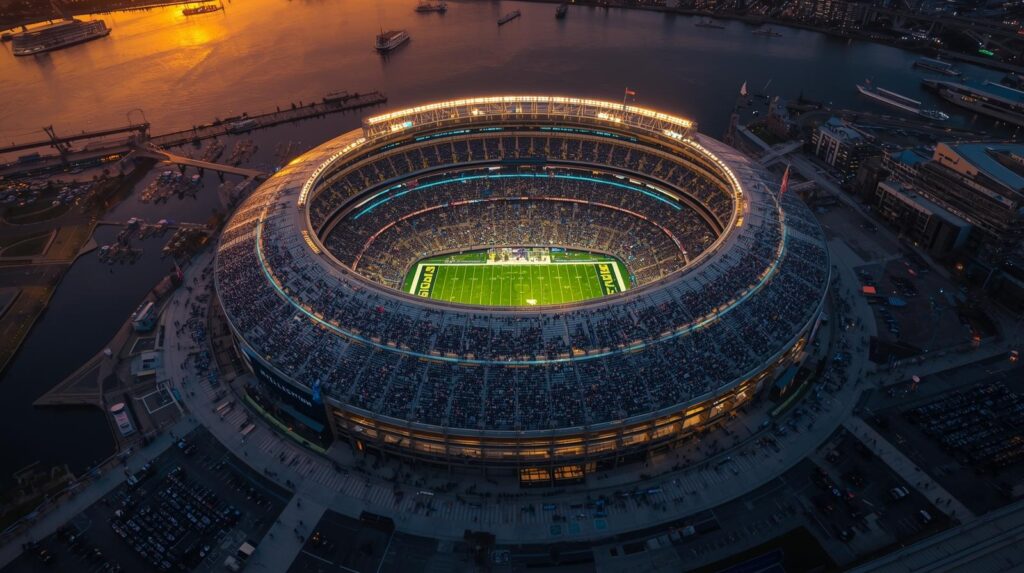

Planning your trip to North America requires a close look at the spectacular World Cup 2026 stadiums anchoring this historic tournament. As Canada, Mexico, and the United States prepare to co-host 104 matches across 16 iconic cities, these world-class venues are undergoing massive transformations to welcome millions of soccer fans. From legendary coliseums to hyper-modern arenas with retractable roofs, knowing where your favorite teams play is essential for securing the perfect match-day experience.
The FIFA World Cup 2026 is set to break records as the largest, most logistically ambitious tournament in sports history. With 48 teams competing across three massive host nations—the United States, Mexico, and Canada—the venues themselves are stepping into the global spotlight.
From historic cathedrals of football to modern engineering marvels, these structures will define the tournament’s atmosphere. To ensure optimal playability, all host cities are implementing rigorous pitch modifications to meet strict international field requirements.
Whether you are plotting out your travel itinerary or tracking matchday environments from home, this is our definitive master ranking of all 16 official World Cup 2026 stadiums by crowd capacity.
The World Cup 2026 Stadium Master Ranking
Managing atmospheric conditions varies dramatically by venue type. Enclosed or retractable-roof environments allow total climate control against summer heat, while historic, open-air structures rely entirely on natural elements to feed their legendary acoustics.
The comparison table below details the physical configurations and seating capacities for every official tournament venue:
| Tournament Venue Name | Original Stadium Name | Location | Seating Capacity | Roof Type | Pitch Surface |
| Dallas Stadium | AT&T Stadium | Arlington, TX, USA | 92,967 | Retractable | Hybrid Grass (Temporary) |
| Estadio Azteca | Estadio Azteca | Mexico City, Mexico | 87,523 | Open-Air | Real Grass (Permanent) |
| New York/New Jersey Stadium | MetLife Stadium | East Rutherford, NJ, USA | 82,500 | Open-Air | Real Grass (Temporary) |
| Kansas City Stadium | Arrowhead Stadium | Kansas City, MO, USA | 76,640 | Open-Air | Real Grass (Permanent) |
| Atlanta Stadium | Mercedes-Benz Stadium | Atlanta, GA, USA | 75,000 | Retractable | Hybrid Grass (Temporary) |
| Houston Stadium | NRG Stadium | Houston, TX, USA | 72,220 | Retractable | Real Grass (Temporary) |
| San Francisco Bay Area Stadium | Levi’s Stadium | Santa Clara, CA, USA | 70,909 | Open-Air | Real Grass (Permanent) |
| Los Angeles Stadium | SoFi Stadium | Inglewood, CA, USA | 70,240 | Fixed Enclosed | Real Grass (Temporary) |
| Boston Stadium | Gillette Stadium | Foxborough, MA, USA | 65,878 | Open-Air | Real Grass (Temporary) |
| Philadelphia Stadium | Lincoln Financial Field | Philadelphia, PA, USA | 69,328 | Open-Air | Real Grass (Permanent) |
| Seattle Stadium | Lumen Field | Seattle, WA, USA | 69,000 | Open-Air | Real Grass (Temporary) |
| Miami Stadium | Hard Rock Stadium | Miami Gardens, FL, USA | 65,300 | Open-Air (Canopy) | Real Grass (Permanent) |
| Vancouver Stadium | BC Place | Vancouver, BC, Canada | 54,500 | Retractable | Real Grass (Temporary) |
| Estadio Monterrey | Estadio BBVA | Guadalupe, NL, Mexico | 53,500 | Open-Air | Real Grass (Permanent) |
| Estadio Guadalajara | Estadio Akron | Zapopan, JAL, Mexico | 48,071 | Open-Air (Canopy) | Real Grass (Permanent) |
| Toronto Stadium | BMO Field | Toronto, ON, Canada | 45,000 | Open-Air | Real Grass (Permanent) |
Fan Advisory: Attending games live means navigating vastly different host city layouts. If you want to experience the local tournament buzz outside of these mega-structures, explore our comprehensive guide onofficial FIFA Fan Zones 2026 locations and passesto secure entry to regional viewing hubs.
The Great Pitch Transition: Turf to Real Grass
The defining technical challenge of this tournament is pitch uniformity. FIFA mandates that every match must be played on high-performance natural grass or advanced hybrid grass systems. For a majority of the US and Canadian venues—which traditionally feature synthetic turf for gridiron football—this requirement has triggered monumental engineering conversions.
Engineers are rolling out a sophisticated, multi-layered system underneath temporary sod installations to ensure the grass survives the intense eight-week tournament schedule:
1.Vacuum & Ventilation Layer:Base Level.
A specialized sub-air system is laid down first to actively regulate air flow and pull excess moisture away from the root zones.
2.Gravel Drainage Raft:Layer 2.
A 4 to 6-inch layer of compact gravel (or modular plastic drainage cells) is installed to manage heavy moisture dispersion.
3.Sand Rootzone Matrix:Layer 3.
A strict 6 to 12-inch profile of specialized sand is spread evenly across the drainage base to meet exact root filtration density metrics.
4.Sod Installation & Stitching:Surface Level.
Mature natural sod—typically a durable blend of Kentucky bluegrass and perennial ryegrass—is laid down. For hybrid venues like Atlanta and Dallas, synthetic fibers are stitched directly into this sod matrix to increase durability against heavy cleat wear.
To replicate natural environments inside massive enclosed domes like Los Angeles Stadium or Atlanta Stadium, ground crews deploy advanced, mobile UV grow-light rigs that crawl across the field daily. These grass surfaces are manicured constantly, gradually reducing blade heights to achieve a uniform playing depth of exactly 23 millimeters by kickoff.
Stadium Highlights: Unique Structural Designs
The Loudest: Kansas City Stadium
Holding a official world record for crowd noise, this open-air bowl shape traps and magnifies sound waves. Without a roof or canopy to filter the atmosphere, traveling teams face an intimidating wall of acoustic pressure.
The Historic: Estadio Azteca
As the first venue to host three separate World Cups, Azteca’s open-air structure is legendary. Sitting at an altitude higher than 7,200 feet above sea level, the thin air alters ball aerodynamics and tests player stamina like nowhere else on earth.
Key Features of the World Cup 2026 Stadiums
The sheer scale of the upcoming tournament means that the selected World Cup 2026 stadiums must meet rigorous FIFA standards for capacity, safety, and pitch quality. Spanning three distinct regional divisions—Eastern, Central, and Western—these arenas highlight the best of modern sports architecture.
| Region | Featured Arenas | Highlight Match |
| Eastern | MetLife Stadium, Lincoln Financial Field, Hard Rock Stadium | The Grand Final (New Jersey) |
| Central | AT&T Stadium, Estadio Azteca, Mercedes-Benz Stadium | Opening Match (Mexico City) |
| Western | SoFi Stadium, BC Place, Lumen Field | US Team Debut (Los Angeles) |
Why Travel Logistics Matter for These World Cup 2026 Stadiums
Because the host venues are spread across an entire continent, booking accommodations near the official World Cup 2026 stadiums requires early planning. Venues like Dallas Stadium (AT&T Stadium) are located in sprawling entertainment districts where staying nearby saves hours of transit time, while urban sites like Atlanta Stadium or Vancouver’s BC Place offer direct, rapid public transit options right to the gates. Be sure to check stadium-specific overlay rules, as commercial venue names change to neutral FIFA designations throughout June and July.
The High-Tech: Atlanta Stadium & Dallas Stadium
Both venues feature striking retractable roof designs and massive central video boards. Their reliance on temporary hybrid grass platforms highlights how engineering can transform modern multi-use entertainment complexes into world-class soccer pitches.
For deeply technical documentation regarding sports turf evaluations and biomechanical safety parameters, you can review the stadium certification criteria hosted directly on the FIFA Quality Programme Portal, which sets global guidelines for professional pitch performance.